Creating a butterfly and caterpillar garden is only the beginning. Enjoying a butterfly and caterpillar garden comes next. As soon as butterflies and caterpillars appear on leaves, the garden becomes a place for quiet enjoyment and observation. Here are five gentle ways to enjoy the wildlife your garden is supporting, helping you notice details you might miss.
1. Photography
I am a photographer, and I have found that photography changes how I see wildlife. Looking through a lens often reveals details that the naked eye misses. A photograph can be sharper, more focused, and allow you to study small features more closely. Zooming in on an image can reveal fascinating details of a butterfly or a caterpillar, a chrysalis or some eggs. Things you may not have noticed at the time, simply because everything happened too quickly.
It doesn’t matter whether you use a digital camera or a mobile phone. Both can capture moments that deepen your understanding of what you are seeing. Sometimes it is only after taking a photograph that you realise how intricate a butterfly’s markings or textures really are.
When photographing a Large White butterfly at close range, for example, you may notice the bold black edge along the forewing, running from the wing tip towards the curve of the wing, as well as the rounded black spots on the forewings. If you are lucky enough to capture the antennae in detail, you may see their delicate black and white stripping. The compound eyes, made up of thousands of tiny lenses, allow the butterfly to see almost all around itself. The underside of the wings often has a soft lemon tint, with feint markings near the veins that are easy to overlook when the butterfly is in motion.
Photographing butterflies means entering their quiet world. Sudden movements send them fluttering away before you realise what has happened. I sit on a small folding stool near plants, such as buddleia or purple-top vervain, both of which are reliable butterfly magnets. I wait, stay still, and hope that a butterfly will land close enough to allow a photograph.The act of waiting, and sometimes missing the moment, becomes part of the enjoyment.
A helpful photographic guide
If you enjoy looking closely at insects, you may also find A Photographic Guide to Insects of Southern Europe & the Mediterranean by P. D. Brock helpful. The book contains exceptionally clear photographs of butterflies and other insects, revealing close-up details that are often missed in the field. I have found it useful for understanding markings, textures, and structure after taking photographs in the garden.
2. Recording Butterflies and Caterpillars Seen
When I first spotted a caterpillar hiding beneath a leaf, I was keen to discover what butterfly it would change into. I took an instant shot with my mobile, and looked it up, in a field guide and online. The Woodland Trust has been quite helpful with identifying butterfly caterpillars, and moth caterpillars, which are often overlooked.
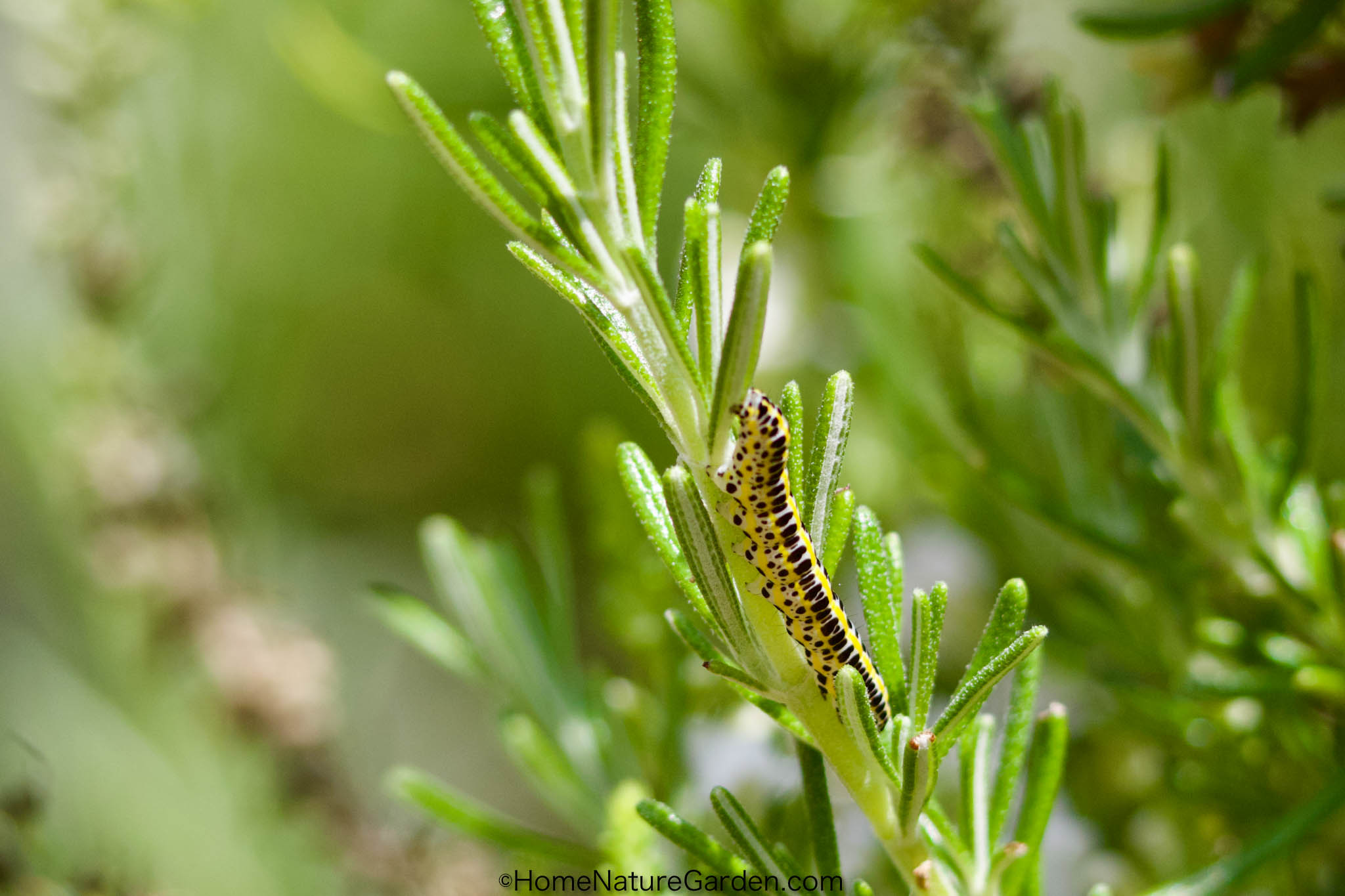
I managed to take a photograph of a bright yellow caterpillar. I later discovered it was a Toadflax moth. Noticing it, recording it and trying to identify it, made the experience more interesting than simply seeing it and moving on.
Keeping a journal is an enjoyable way of recording the butterflies and caterpillars you see in your garden. You could note when they appear, which plants they feed on, or where they rest overnight. Noting behaviour, such as feeding, mating, laying eggs or taking in the sun, is also interesting.
Painted lady butterflies, for example often sunbathe on warm afternoons in the afternoon, resting on the lawn or high up on a tree or bush with their wings fully outstretched. These repeated observations help you to recognise patterns and become more familiar with individual species.
You may also enjoy learning alongside others. Many local nature reserves and wildlife groups offer guided walks during spring and summer. These walks are a gentle way to learn more about butterflies in your local area and share observations with others, who are curious to find out more.
3. Rearing Caterpillars Ethically
It is rewarding to watch caterpillars grow and transform. However, when it comes to rearing caterpillars, it is best to think about rearing caterpillars with respect for the insects needs, the environment it lives in and its host plant.
If you find a caterpillar on a mallow, or nettle, for example, you might feel like bringing it indoors to watch it grow and develop. It’s important to note that, caterpillars are adapted to the conditions in the garden and on the host plant. Including light cycles, humidity, temperature, and natural predators which shape their timing and behaviour. Bringing caterpillars indoors may change their development and increase mortality or stress unless you recreate their natural environment.
Guidance on rearing caterpillars
I have found the UK Butterfly Conservation website has excellent advice on rearing and observing caterpillars indoors. When there, search for “rearing caterpillars”.
Tips on rearing caterpillars:
- Keep caterpillars on their host plant Provide fresh leaves from the plant where you found them
- Provide ventilation Use a well-ventilated container with perforations or mesh
- Copy natural conditions Place containers where temperatures are the same as the outdoors (not near direct sun or heaters)
- Avoid pesticides and soaps Even trace elements may harm delicate larvae
Write a caterpillar journal:
- Date found
- Host plant
- Size and colour changes
- Moulting stages
- When they pupate
After a caterpillar pupates, it will attach itself and form a chrysalis. At this time, it is usual to place the container where the chrysalis can safely complete metamorphosis and emerge as a butterfly. When the adult butterfly emerges, allow it to warm up and dry its wings before releasing it back on its host plant.
Rearing caterpillars is about observation, rather than control. The quiet observation of a transformation that often goes unnoticed in the garden.
A helpful guide to caterpillar ID
Butterfly Conservation also have excellent caterpillar ID pages on their website.
Small list of common mistakes to avoid:
- Keeping caterpillars in airtight jars
- Feeding them the leaves of a wrong plant
- Handling them frequently
4. Supporting Butterfly Conservation
Joint the Annual Butterfly Count
Observing a butterfly in your garden may feel particularly meaningful when you are aware of the challenges they face. Many species have been in long-term decline, and learning about these changes was one of the reasons I began writing this series. You can read more about this in Butterflies at Risk.
Butterfly populations in the UK have declined steadily since the late 1970s. One easy way to help is by taking part in the Big Butterfly Count, a nationwide citizen science survey run by the Butterfly Conservation. The butterfly count takes place each year between late July and early August. It asks people to record the butterflies they see in 15 minutes during sunny weather. In parks, fields, forests, school grounds or gardens. In a fixed position or on a walk.
By recording butterfly sightings, the Big Butterfly Count helps scientists understand long-term trends and assess the health of our environment. Every count is important, even no butterflies seen, provides valuable information.
Taking part is straightforward and requires no specialist knowledge. It is also a rewarding way to feel connected to a wider community of people that care for butterflies, and their future.
You can find out more information on how to take part, and latest results, on the Butterfly Conservation website.
5. Observing, Letting Be, and Staying Connected
As you start enjoying a butterfly and caterpillar garden, you may notice how easily observation turns into care. Photographing a butterfly, recording a sighting, or watching a butterfly emerge creates a sense of connection with nature. An important part of enjoying a butterfly garden, is knowing when to let things just be.
Not every caterpillar needs to be reared, and not every butterfly sighting needs to be recorded. Simply observing what is present and letting nature do what it will, is often enough. Some butterflies will pass through your garden briefly and some caterpillars will not survive.
This is all part of the natural cycle and a part of wildlife gardening.
By creating a garden that offers food, shelter and space to move through, you are contributing to nature. When you choose to take part in the butterfly count or support conservation, your quiet observation becomes a part of the wider picture. Your small, local experience connects to a wider effort to understand and protect butterflies across the country.
Enjoyment comes from observation, not from control. Sitting quietly, watching butterflies feed, sunbathe, or fly away in the warm air, reminds us that gardens can be places of calm as well as action. Over time, these special moments deepen your sense of awareness of seasonal rhythms and the fragile beauty of the life they support.
In this way a butterfly and caterpillar garden becomes more than plants and borders. It becomes a place to observe, to learn, and to feel connected, a sanctuary for nature – and for you.
Butterflies and Caterpillars in the Nature Garden – The Series
This article is part of a series exploring how gardens can support butterflies at every stage of their life cycle, through observation, tolerance and the right plants. The article is also placed within a wilder wildlife garden, where enjoyment comes from observation, patience, and noticing how wildlife settles into a shared space.
If you’d like to help butterflies thrive in your garden, read my series of articles on:
- Butterflies at Risk: What Inspired My Writing on Butterflies
- Butterfly Friendly Plants for a Thriving Wildlife Garden
- Plant Foods for Caterpillars & How to Spot Leaf Damage
- Designing a Plan for a Butterfly and Caterpillar Garden
- 5 Ways to Enjoy your New Butterfly and Caterpillar Garden
- UK Butterfly & Caterpillar Books to Read In or Near Your Garden