Spending time in a butterfly and caterpillar garden naturally sparks curiosity. You begin to notice behaviours, caterpillars on plants, markings, or butterflies which you want to understand better. Butterfly and caterpillar books offer a gentle way of deepening your understanding.
This selection includes butterfly and caterpillar books that I have dipped into, or read or researched carefully. Together they range from practical field guides, beautifully illustrated reference works, to thoughtful natural history books. All are well suited books to reading in or near your garden, or retuning to after a walk. All will help you learn more about the wildlife your garden supports.
Disclosure: This post contains affiliate links. If you buy through these links, I may earn a small commission at no extra cost to you.
Butterfly and Caterpillar Books.
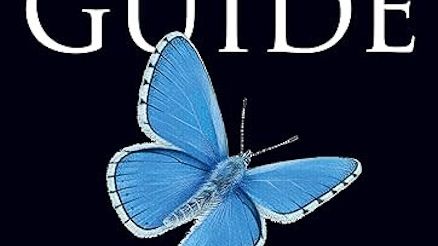
1. Collins Butterfly Guide: The Most Complete Guide to the Butterflies of Britain and Europe
Tom Tolman & Richard Lewington
Year of Publication: 2009
Dip into this beautifully illustrated guide to see most of the butterflies, you’re likely to see in Britain and across Europe. Whether in your garden or traveling further afield.
The book provides a clear introduction to butterfly anatomy and life cycles, followed by concise but authoritative species accounts.
Each entry includes information on range, distribution, variation, flight time, habitat, and life history. It also covers behaviour and conservation, and even notes the original describer of each species, some dating back to the 18th century.
Photography / Illustrations:
Over 2,000 elegant color illustrations.
Strengths:
Exceptional coverage of British and European species.
Clear, authoritative species information.
Beautiful illustrations that are essential for careful study.
Limitations:
This does not include images of caterpillars.
This is my favourite butterfly book.
Available at Amazon
2. Butterflies of Britain and Western Europe and Their Caterpillars – An Identification Guide
Jean-Pierre Moussus
Year of Publication: 2026
This comprehensive guide is unusual in covering not only adult butterflies, but most of their caterpillars and egg stages across Britain and Western Europe. At 640 pages, it includes more than 1,500 color photographs, 300 distribution maps, and identification keys for adults, larvae, and eggs.
It covers 472 species and is designed as both a practical field guide and a detailed identification resource.
Photography
More than 1,500 colour photographs across different life stages.
Strengths:
Unique, excellent coverage of eggs, caterpillars and adult butterflies.
Identification keys for different life stages.
Designed for both field use and more detailed study.
Limitations:
A substantial book at 640 pages.
May off more detail than a beginner needs.
I haven’t yet seen this book in person. The information above is based on published details and reviews.
Available at Amazon
3. Britain’s Butterflies: A Field Guide to the Butterflies of Britain and Ireland
David Tomlinson & Rob Still
Year of Publication: 2021
This practical field guide is ideal for identifying butterflies usually spotted in the UK and Irish countryside and in gardens. Clear photographs and concise descriptions make it an accessible to use for identification, whether you’re out walking or observing butterflies at home.
Photography:
High quality colour photographs of butterflies.
Strengths:
Easy to use.
Portable and practical.
Ideal for beginners and everyday identification.
Limitations:
Focuses mainly on adult butterflies rather than caterpillars.
Available at Amazon
4. Field Guide to the Caterpillars of Great Britain and Ireland
Phil Sterling & Barry Henwood
Year of Publication: 2020
This is an essential field guide for identifying caterpillars found on garden plants. It focus on habitats and food plants makes it useful if you’re trying to find out which caterpillars are feeding on plants in your garden, or while you are out exploring.
Illustrations:
Detailed color illustrations showing caterpillars and their identifying features.
Strengths:
Excellent for caterpillar identification.
Detailed information on caterpillar food plants and habitats.
Covers moth and butterfly caterpillars.
Useful for identifying caterpillars found in the garden and the countryside.
Limitations:
More specialised than a general butterfly field guide.
Best used alongside a butterfly guide for adult butterflies.
Available at Amazon
5. Butterflies of Britain and Ireland
Jeremy Thomas
Year of Publication: 2019
A comprehensive guide focusing on the butterflies of Britain and Ireland, in much more depth than a general identification guide. It covers identification, habitats, behaviour, life cycles, and conservation. Making it ideal for readers who want clarity and depth on how butterflies live and how to identify them.
Photography and illustrations:
Detailed photographs, illustrations, maps and diagrams supporting. identification and understanding of butterfly ecology.
Strengths:
Excellent detail on butterfly habitats and life cycles.
Strong ecological and conservation context.
Useful for readers who want to go beyond basic identification.
An authoritative reference books to dip into as your knowledge increases.
Limitations:
Larger and more detailed than a field guide.
May offer more details than someone wanting a quick identification guide needs.
Available at Amazon.
6. A Photographic Guide to Insects of Southern Europe & the Mediterranean
Paul D. Brock
Year of Publication: 2017
A rich photographic guide contains stunning close-up images of caterpillars, butterflies, and other insects, across southern Europe and across the mediterranean. It’s perfect for studying markings, body structure and small features that can help with identification.
Photography:
Exceptional close up and macro photography covering a wide range of insects.
Strengths:
Ideal for insect and nature photographers.
Excellent for visual comparison.
Encourages close observation of markings and insect structure.
Covers much more than butterflies and caterpillars.
Limitations:
Focuses on Southern Europe and the mediterranean rather than Britain.
Broad insect focus means caterpillars and butterflies are only a small section in the book.
Available at Amazon
7. The Moths and Butterflies of Great Britain & Ireland
John R. Heath, A. Maitland Emmet, & John Langmaid.
Year of Publication: Multi-volume series (1970s – present)
This multi=reference work provides scientific coverage of the moths and butterflies of Great Britain and Ireland. It is written and edited by leading Lepidopterist, it explores identification, distribution, biology and life history, in great depth. It is suitable for experienced enthusiasts and specialist reference rather than every day garden identification.
Illustration:
Scientific plates and detailed descriptions.
Strengths:
Exceptional depth and scientific detail.
Authoritative reference for serious butterfly and caterpillar enthusiasts.
Useful for deeper research into species and their histories.
Limitations:
Specialist multi-volume reference rather portable field guide.
Individual volumes may be cheaper second hand, than brand new volumes.
Available at Amazon
8. A Comprehensive Guide to Insects of Britain & Ireland
Paul D. Brock
Year of Publication: 2019
A wide ranging insect guide that contains butterflies in various views (female, male, and underside). It suggests locations where species may be found, such as Hickling Broad, Norfolk, a fenland habitat. Ideal for Swallowtails.
Photography:
2,900 excellent photographs of species and 2,100 maps
Strengths:
Excellent location guidance.
Broad comparative references.
Limitations:
It has 544 and is rather heavy.
→ Available at Amazon.
9. New Naturalist: Butterflies
E. B. Ford
Year of Publication: 1945 (Reprints are available)
A classic British natural history book that explores butterfly ecology and behaviour in depth.
Photography / Illustration:
It has illustrations rather than modern photographs
Strengths:
Thoughtful, reflective reading.
Has a historical perspective.
Limitations:
Not designed for quick identification.
Less detailed than larger field guides
Limited focus on caterpillars
Available at Amazon.
10. Pocket Guides.
Butterflies: Collins Gem
Year of Publication: 2004
Lightweight pocket guide covering about 240 butterflies and moths.
Photography:
Excellent colour pictures
Strengths:
Easy to carry in your pocket, whilst in your garden and out on nature walks.
Quick identification.
Available at Amazon.
Britain’s Butterflies (WILDGuides): A Field Guide to the Butterflies of Great Britain and Ireland. (Fully revised and updated edition) by David Newland.
Year of Publication: 2020.
Includes eggs, caterpillars and adult butterflies, in a compact format.
Photography:
Clear colored photographs of all stages of the butterfly life cycle.
Limitations:
Focuses on butterflies rather than moths.
Strengths:
Easy to carry.
Ideal in the garden and out walking.
Straightforward layout for quick reference.
Available at Amazon.
Which butterfly and caterpillar book should I start with?
- For caterpillars: Field Guide to the Caterpillars of Great Britain and Ireland.
- For portability: Collins Gem: Butterflies.
- For reflective reading: New Naturalist: Butterflies.
Are any books too old?
- Collins Butterfly Guide (2009) – still authoritative and widely used.
- New Naturalist: Butterflies (1945) – classic, reflective, not dated in its information.
- Collins Gem (2004) – fine for common species and portability.
Conclusion
Butterfly and caterpillar books may be considered as a companion to time in the garden, because they enrich what you see when you are in your garden.
A field guide may help you identify and name what you observe. A natural history book may deepen your understanding of why, what you observed matters.
Whether you are identifying a caterpillar, learning more about a butterfly’s life cycle, or simply enjoying quiet reading among your plants, these butterfly and caterpillar books offer another way to connect. Gradually, they become a special part of your observations — helping your garden become a sanctuary for nature – and for you.
Book links are mentioned for readers who would like to explore further. I recommend books that I find informative or useful.
I have not seen the following books in person. However, reviews suggests the Jean-Pierre Moussus, guide, will be informative. I have included the New Naturalist: Butterfly book, for readers who might enjoy a nature book. The Collins Gem and Britain’s Butterflies are both convenient and detailed, and designed to be carried easily in the pocket.
Butterflies and Caterpillars in the Nature Garden – The Series
This article is part of a series exploring how gardens can support butterflies at every stage of their life cycle, through observation, tolerance and the right plants. The books featured here can help you identify butterflies and caterpillars, understand their behaviour and learn more about the wildlife visiting your garden. It also connects with my wider guide to creating a wildlife garden, where observation and practical habitat choices work together to support a wider range of species.
If you’d like to help butterflies thrive in your garden, read my series of articles on:
- Butterflies at Risk: What Inspired My Writing on Butterflies
- Butterfly Friendly Plants for a Thriving Wildlife Garden
- 10 Plant Foods for Caterpillars & How to Spot Leaf Damage
- Designing a Plan for a Butterfly and Caterpillar Garden
- 5 Ways to Enjoy your New Butterfly and Caterpillar Garden