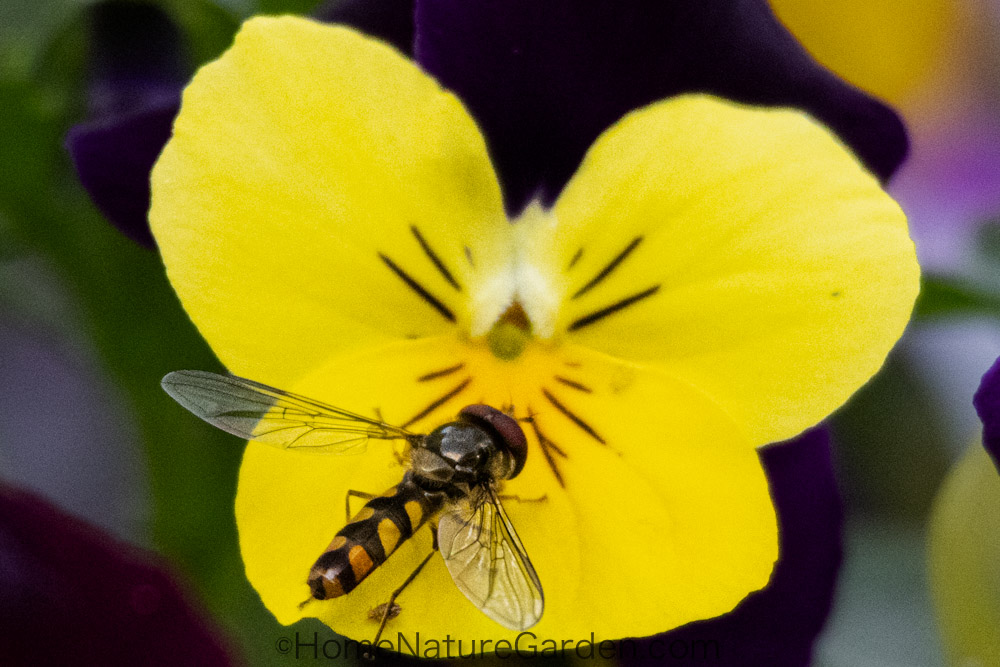
Why Hoverflies in the British Garden Deserve Our Attention.
On warm days in June, about lunchtime in my garden, hoverflies hover near the flowers by the pond. In recent years I have added some nectar rich plants around the pond. This has created a small wildlife area that attracts quite a diverse range of insects. The hoverflies seem to be attracted to these plants, and the well established yellow flag irises when they are in bloom. Watching them feeding among the flowers, I could often see them collecting pollen. These observations have helped me appreciate the valuable role that hoverflies play in the British garden. Not only as pollinators but also as contributors to biodiversity and ecological balance.
Looking through my photographs of insects I have taken in my garden this summer, I realised that each insect has a different ecological story. Some are predators, some are pollinators, and others are both of these. I selected the hoverfly to write about as it is very often overlooked and is a most fascinating insect in the British garden.
Hoverflies are common on sunny days in areas where there are nectar flowers, in heathlands, meadows, and gardens. They are not only insects that resemble bees and wasps, they are also important pollinators, pest controllers and an essential aspect of the garden ecosystem. This article explores the amazing world of the hoverfly, why they are commonly mistaken as wasps and bees, and why gardeners should welcome them into their gardens.
What is a Hoverfly?
A hoverfly is a fly that belongs to a group of small and large flies. They have mostly yellow and black markings. These insects prefer the warmth of the sun, some mimic wasps and bees, and all have a role to play in pollination.
Why do Hoverflies Look Like Wasps?
At first glance, hoverflies look like bees and wasps, with their striking yellow and black markings. Many mimic bees and wasps to avoid predators, who do not wish to be stung. Hoverflies are flies with hairy bodies that drink nectar, and have many similarities with bees and wasps. They also use a proboscis or long tongue, to reach deep into the flower to drink nectar, unlike other flies. Some species of hoverfly also take pollen from plants.
Do Hoverflies Sting?
People frequently ask if hoverflies sting. I have watched many hoverflies in my rural garden, however I have never seen them be aggressive against other insects or people. Despite their distinctive wasp like appearance they are completely harmless and have no sting.
What was Hovering Above my Flowerbed?
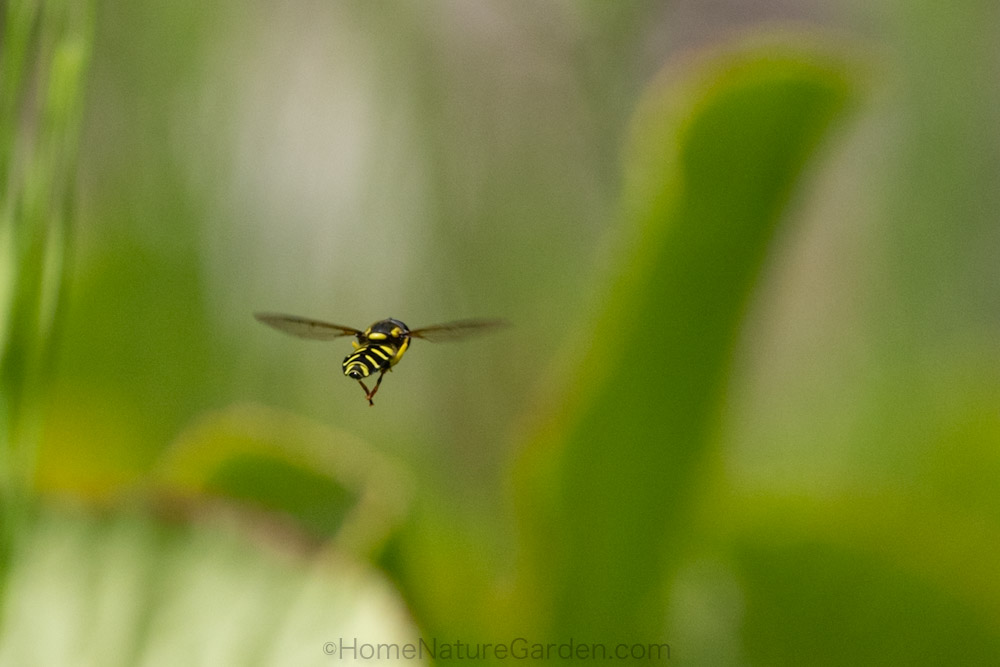
If you saw a black and yellow fly that looked like a wasp, or a bee, it was probably a hoverfly. Like bees, hoverflies hover in front of flowers but hoverflies hover for longer. Bees have wings that are set further back on their body, but they they can’t hold their wings out for very long. Unlike bees, hoverflies appear to be suspended in the air, when they hover. When you watch them hovering, motionless, they suddenly dart away at great speed. Whereas, bees tend to fly steadily between the flowers rather than hover. Their ability to hover has given them their name. They are a very distinctive insect in the garden.
What Can Aphids Teach Us about the Garden Ecosystem?
When I first noticed a lot of aphids covering the stems and branches of a rose, I felt like many gardeners. My instinct was to take a step back and stare at the plant, and wonder if I should be very concerned. The tiny green aphids were feeding on the sap on the plant stems in large numbers.
While I was staring at them, my view changed. They were not a problem which needed solving. Instead, they were a part of the garden ecology. They were feeding and reproducing, and they were also the food for other insects. This was the moment when I started to notice the hoverflies. They were taking nectar and pollen from nearby flowers and I found out that their larvae were eating the aphids. Initially this looked like an infestation problem I had to deal with, but it was a a food cycle in action. Caterpillars also form an important part of the garden food cycle.
I don’t think gardeners should ignore the spread of aphids on plants, because plants sometimes struggle to thrive, when this occurs. Yet, it made me think that the wildlife friendly garden is not always perfectly balanced. Over the long term, the insects I was looking at were supporting the predators and the pollinators, and this would create balance. The parts of the process were connected, from the rose, to the aphids, to the hoverfly. When I looked beyond the aphids on the plant, I realised and appreciated the important role hoverflies have in the garden ecosystem.
Are Hoverflies Good for the Garden?
Like bees, hoverflies play a major role in pollination. Butterflies also play a valuable role in pollination. They silently visit flowers looking for pollen and nectar. They are valuable pollinators, helping many plants in the garden to reproduce. Additionally, hoverflies have an ecological value that extends beyond pollination.
I have often seen green sap-sucking aphids on rose stems and branches. Many hoverfly larva are effective predators of these aphids. The hoverfly larva performs a natural role of pest control on these types of plants. Their work benefits gardeners, and contributes to ecological balance in the garden.
What Do Hoverfly Larvae Look Like?
You might be wondering what hoverly larvae looks like. Many people may be familiar with adult hoverflies, but fewer recognise their larvae. Unlike the bright colorings of the adults, larvae are particularly difficult to spot in the garden.
The larvae of hoverfly species are like tiny maggots. They are usually brown, cream or green in color and blend in well with the stems and leaves where they live. This camouflage tends to protect them from predators while they look for food. Both adult and young have different ways of deterring predators, one by camouflage and the other by mimicry.
I became aware of hoverfly larvae when I saw a masses of aphids on the stems of a rose bush. Looking closely, I saw larvae in among the aphids. Unlike the aphids the larvae were moving about feeding on the sap-sucking aphids. Effectively, using a pest control service for gardeners.
What Can Hoverflies in the British Garden Teach Us about Biodiversity?
The presence of hoverflies in the garden shows the value of diversity in the garden. A wide range of flowers support different pollinators across the seasons. This ensures pollen and nectar is available from early spring to early autumn. Hoverflies prefer open flowers that have easy access, such as ox-eye daisy, marjoram, and yarrow. These are important plants in the wildlife friendly garden. Varied planting supports hoverflies, butterflies, bees and other insects.
Hoverflies are a part of a garden ecosystem. Every flower they pollinate and every aphid eaten by their larvae supports a healthy, thriving garden. Though frequently overlooked in the garden, hoverflies have an important role in maintaining the balance in the wildlife friendly garden.
How Can You Attract Hoverflies to Your Garden
It is fairly straightforward to create a garden that would be attractive to hoverflies. Like many pollinating insects, hoverflies are attracted to gardens that have nectar-rich flowers and pollen throughout the spring and summer months.
Those same nectar-rich flowers can support other amazing visitors as well, including Humming-bird Hawk-moths, which hover at flowers to feed through their exceptionally long proboscis.
In my garden, Hoverflies are particularly attracted to the yellow flag irises near the pond. They also visit other flowers including the poppies. A variety of flowering plants ensures that hoverflies have a good supply of food from spring to early autumn.
Hoverflies are also frequently drawn to lavender, ox-eye daisy, yarrow and marjoram. Native English wildflowers are excellent food sources for these insects.
Avoiding the use of pesticides is also an important factor. Aphids are regarded as pests in the garden, however, a small amount left on plants would be food for the larvae of hoverflies. The larvae operate a natural pest control service for the gardener.
A wildlife pond is also attractive to hoverflies and all pollinating insects. Not only does it provide water, it also provides habitat for a variety of species. A pond combined with nectar-rich flowers, and a friendly wildlife approach to gardening can help to create a thriving ecosystem for hoverflies and other insects to flourish.
Photographing Hoverflies in the British Garden
Photographing hoverflies in the garden has made me slow down, to watch and wait. Hoverflies very often return to the same flowers making them rewarding subjects to photograph.
Calmer, sunny days, with little wind, is the best time to photograph hoverflies. They are active in my Suffolk garden around about lunchtime, particularly when flowers with nectar are in bloom. I have found that the yellow flag irises near the pond attract them. This provides opportunities for photography.
I enjoy watching the hoverflies hover near the flowers, for a few seconds at a time before suddenly darting off. Often, I sit and wait near the irises for an opportunity to take a shot. Occasionally I manage to get one hovering in mid-air.
Reviewing my photographs of these insects, I realised that I have seen hoverflies collecting pollen, drinking nectar and interacting with other insects. Photographs provide more details than what you can see with the naked eye. For example, grains of pollen clinging to the hoverflies body, or the details of the hoverflies markings. For me, the camera has become a fantastic tool for observing and finding out about the hidden ecological details of hoverflies in the British garden.
Tips for Photographing Hoverflies in the British Garden
Take pictures on sunny, warm days.
Keep an eye on flowers that hoverflies regularly visit.
Wait patiently close by and let the overfly come to you.
If your camera has continuous shooting mode this may work quite well.
If possible, focus on the eyes.
Conclusion
The best thing about watching nature in your garden, is noticing the small things that take place everyday. A rose plant covered in aphids, not just one or two but hundreds. I thought I had a problem. Later, I found out that the larvae of hoverfly were eating them, in amongst the aphids. What seemed like a problem was a part of the mix of connections that make up a healthy garden ecosystem.
The hoverfly as a single insect, connects the various part of that ecosystem. connects flowers, aphids, pollination and garden diversity. Adult hoverflies pollinate flowers, lay eggs on plants that change into larvae, which in turn eat aphids that suck-sap from plants. The closer we look, the more connections between species and plants we see.
Next time when you are in the garden, look out for a special moment. When a hoverfly hovers really close to where you are standing. So close that you can see the individual stripes of yellow on its abdomen. Perhaps you’ll see a hoverfly taking pollen in a flower head.
Further Reading
If you enjoyed learning about hoverflies, you may be interested in these related articles on caterpillars, butterflies, and wildlife gardening,
Plant Foods for Caterpillars & How to Spot Leaf Damage
Butterfly Friendly Plants for a Thriving Wildlife Garden
Designing a Plan for a Butterfly and Caterpillar Garden
When a Garden Becomes a Wildlife Space
Learn More
Advice on wildlife gardening from The Wildlife Trust.
Information on pit stops for pollinators available from Butterfly Conservation.
Wildlife gardening advice from The Royal Horticultural Society.
FAQs About Hoverflies in the British Garden
1. Are Hoverflies Harmful to People?
No, Hoverflies are harmless and do not sting. Many hoverflies look like bees or wasps they are non-aggressive and cannot sting. Hoverflies mainly feed on pollen and nectar and are important pollinators in the garden.
Why do Hoverflies Look Like Bees or Wasps?
Many species of Hoverflies mimic bees or wasps with their black and yellow markings. Those markings make them less attractive to predators because they think they will be stung.
3. What do Overfly Larvae Eat?
The larvae of several species of hoverfly eat aphids. However, some species feed on decaying plant material and decaying matter. Larvae that eat aphids are a natural form of pest control in the garden.
4. When are Hoverflies in British Gardens Mostly Active?
Hoverflies are usually active from early spring to early autumn, especially on sunny, warm days. Most activity occurs in the middle of summer when flowers are in full bloom.