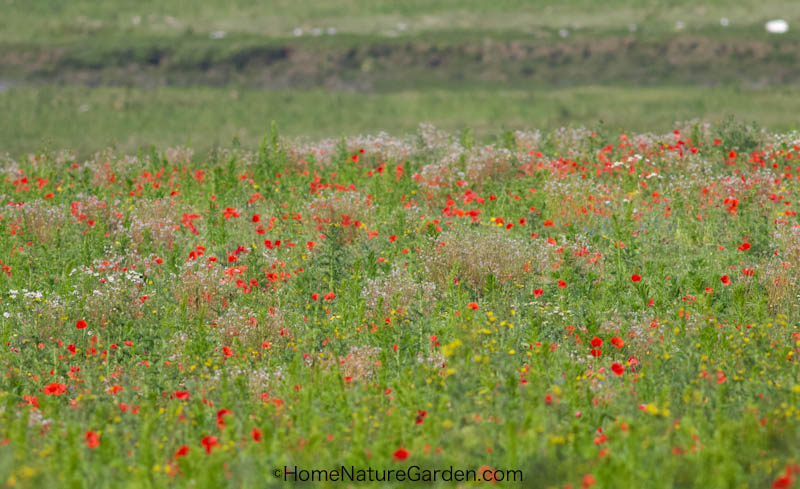
There is something bright and cheering about an area of beautiful wildflowers in bloom, blowing gently in the wind, during the summer months. What begins as a handful of seeds, sprinkled on raked over bare soil, can become a place full of wildlife. This guide on best wildflower seeds UK will help you get started.
You may see bees flying from one red poppy to another, butterflies gently landing on ox-eye daisies, and, if you look closely caterpillars hidden beneath the leaves.
Thinking about starting a wildlife area
If you are thinking about starting a wildlife garden, or seeking an area specifically for pollinators, sowing a packet of mixed wildflower seeds is a simple, effective step towards a wonderful vision of wildflowers in bloom.
This guide explores the best wildflower seeds UK and how to choose one that will support wildlife, and flower across the seasons. However, with patience, some may be self seeding wildflowers and grow again each year.
Why Wildflower Seeds Are Important for Wildlife
A packet of wildflower seeds can change a garden to make it more attractive to butterflies, caterpillars and bees. These wildflower seeds provide food, shelter and a resting places for a variety of pollinators.
Wildflowers provide:
*Nectar for bees and butterflies
*Food plants for caterpillars
*Shelter and resting places for insects
*A mix of fallen seeds later in the year for birds
*Support for overall diversity
Butterflies may visit the garden looking for specific foot plants for their caterpillars. However, in gardens where these plants are not available, butterflies may briefly visit, but will move on, and visit other gardens.
If you would like to read about food plants suitable for caterpillars, you may enjoy my guide to plants foods for caterpillars, where I explore the link between butterflies and the plants they depend on.
Best Wildflower Seeds UK
Seed mixes are designed for different purposes. Some are made for wildlife, whereas others are designed for colour, or for specific conditions, such as shade, pond edges, or full sun.
Choosing the right mix depends on your space and what you would like your garden to become.
Here are five of the most popular types of seeds.
1. Wildflowers for Pollinators (Bees & Butterflies)
These wildflower mixes are designed to provide nectar across the seasons, helping to support bees and butterflies over a longer period of time.
Best for:
*Nectar-rich planting.
*Gardens where you want to see butterfly and bee activity.
Pros:
*Long flowering season will support pollinators
*Encourages repeat visits from bees and butterflies.
Tip: Look out for “pollinator friendly” or “bees & butterflies” labels on seed mixes.
2. Wildflower Seeds for Small Gardens UK
Best for:
*Balconies and patios.
*Small gardens.
Pros:
* Quick and easy to establish.
*Good for beginners.
*Easy and accessible.
3. Wildflower Meadow Mixes
A wildflower meadow seed mix usually contains a range of species of flowers and grasses. Over time, this creates a natural looking flower area that supports many different forms of wildlife.
Best for:
*Beginners.
*For natural, slightly untidy areas
*Medium to large gardens
Pros:
*High biodiversity
*Long-term wildlife habitat
n.b. Can take one or two years to fully establish
Cons:
*Needs space and patience
4. Wildflower Seeds for Shaded Garden UK
Wildflowers grow in shade. However, they are slower to establish. Shade tolerant or woodland mixes are suitable for areas with less sunlight, such as north facing borders or under trees.
Best for:
*Shaded areas.
*Woodland planting.
Pros:
*Provides colorful flowers in shaded areas.
*Supports early season pollinators.
Affiliate disclosure: This post contains affiliate links. If you make a purchase through one of these links, I may earn a small commission at no extra cost to you. As an Amazon Associate I earn from qualifying purchases.
Shade tolerant or woodland mixes usually contain foxglove and red campion, which have adapted to low light.
5. UK Native Wildflowers Mix
If you seek to support as much wildlife as possible, the best choice is to choose UK native species. These include species that have evolved alongside native UK plants which makes them valuable for biodiversity.
Best for:
*Wildlife focused gardening.
*Creation of a long-term habitat.
Pros:
*Supports specialist species.
It has strong ecological value.
Budget and Premium Wildflower Seed Mixes
Seed mixes vary in price.
Budget seed mixes (£3.00 – £10.00)
*Frequently contain more non-native or annual species.
*Faster colour spread, but less value in the long-term.
*May need to be re-sown annually.
Premium seed mixes (£15 – £30.00)
*Often contain higher amount of native perennials.
*Better for wildlife support over the long term.
When to Sow Wildflower Seeds in the UK
Timing can make a difference to how well the wildflowers establish.
Spring (March – May)
* Best for fast results.
Autumn (August – October)
*Best for long-term establishment.
Autumn sowing enables seeds to experience natural cold. This helps some species germinate successfully.
A Simple Approach to Preparing Soil for Wildflower Seeds
Wildflowers grow best in poor soil, where grasses are not dominant.
A simple approach is enough:
*Remove weeds or grass.
*Lightly rake over the surface of the soil.
*Avoid the use of fertiliser.
*Scatter the seeds thinly.
*Press the seeds gently into the soil.
Try to Avoid Common Errors
Planting into an established lawn.
*Seeds struggle to grow.
Using fertiliser or compost.
*Encourages the grass to grow, rather than flowers.
Expecting flowers immediately.
*Some species take time.
The Wildlife You May See
*Butterflies landing on plants, moving to others, and returning.
*Bees flying steadily through the flowers.
*Caterpillars feeding on certain plants.
*Birds eating seeds later in the year.
Wildflower and long grass areas may attract predators that feed on insects. In July and August, you may come across a wasp spider in your garden, hanging in a round, orb web in the long grasses.
A Few Seed Mixes to Consider
If you are starting out, choosing a suitable seed mix can make things feel easier. There are many options available, and it is a case of finding one that suits your space and the kind of garden you would like to create.
Best General Wildflower Mixes
A reliable choice is the Thompson & Morgan Wild Flower Mixture, which is easily available and easy to establish.
For a lower cost option, a meadow style mix such as Mr Fothergill’s Wildlife Mixture, Mixed can work well. Especially if you are trying a new area in the garden.
Best Bees and Butterfly Mixes
If you aim to support pollinators, a bee & butterfly friendly mix with nectar rich flowers can provide longer feeding throughout the summer months.
Some mixes including the Sylvawood Seeds Bees and Butterflies Wildflower Seed pack available through the RSPB, are designed to support butterflies and bees across the summer months, and are often well reviewed by gardeners.
Alternatively, a Wildflower Bee & Butterfly Meadow Mix Packet is highly recommended for pollinators.
Best Native Wildflower Seed Mixes
For a natural approach, native wildflower mixes can be beneficial for gardens.
These include wildflower species that are suitable for conditions in the UK and can gradually support a wide range of insects over time.
A mixture like the Garden Lawncare Guy UK Native Wild Flower Seeds Mix, mixture can help support a range of insects and create an ecologically balanced garden environment.
Mixed Seed Packs With Grasses
Wildflower seeds mixes can vary, and it’s not always clear what is included.
I’ve had mixed experiences with wildflower seeds. Some mixes can contain lots of different grasses, or a lot of ground cover species, seeds, such as ground ivy and mugwort. Plants that don’t always suit the kind of space I’m trying to create.
In my own garden, I have found that a little bit of control can help. I choose grasses I like and decide where they can be planted. Ivy is in certain areas, such as along a trellis fence rather than within the wildflowers themselves. I have used both grass free and general mixes for my small wildflower area. It’s all about what works best for your space and what you are aiming to create.
Conclusion
You can choose from a variety of wildflowers to suit your space. Your garden does not need to be tidy or perfect or large or small. It can simply become a place for wildlife. A sanctuary for nature – and for you.
Wildflowers are one part of creating a wildlife friendly garden, helping provide food and habitat for butterflies, bees, birds and other wildlife. If you’d like to explore the four essential features of a wildlife garden, food, shelter, water and space for nature; you can read more in a wildlife friendly garden, where I look at how these features support birds, bees, butterflies and a variety of other creatures.
Frequently Asked Questions About Best Wildflower Seeds UK
How many packets of wildflower seeds will I need?
This depends on the size of the area you wish to sow.
As a guide, a packet of pond edge wildflower seeds contains roughly 900 seeds and it’s suitable for covering 1-2 square metres. It is always worth checking the guidance about sowing on the packet, as coverage can vary between seed packets. For example, Chiltern Seeds provide guidance on size of coverage depending on the mix.
Can I buy wildflower seeds without grass seeds?
Yes. Many varieties of wildflower seed mixture do not contain grass.This can be useful if you want a flower rich area.
Are budget seeds suitable for a flower meadow?
Yes. Budget mixtures are a good starting point. Annual wildflower mixes need to be sown every year, and they can produces a colourful flower meadow in the first year.
For a long-term meadow, native, or perennial mixes may be considered along with annual mixes.
How long does it take a wildflower meadow to become established?
Most wildflower meadows take time to germinate and will probably not flower in their first year, unless they are annuals. Whereas, native and perennial meadows may take a year or two to become established.
Which are the best wildflower seeds to buy for a small flower border?
Specific wildflower mixtures for borders or small spaces, can support butterflies and bees and they are designed to grow alongside other plants.
Can I grow wildflower seeds in a container?
Yes. You can use wildflower mixtures suitable for small areas, borders, pathway edges and patio pots. It is also possible to select individual plants that will self-seed and return each year. For example, Calendula, Cornflower, Poppies and Borage.
A practical note, I’ve found after borage has finished flowering, it can be added to the compost. It can also be steeped in water in an old pillowslip. Three to four weeks later it will have created liquid feed for plants. This is a process you can also use with Stinging Nettles.
Which wildflower seeds are best for a shaded garden?
Choose shade tolerant or woodland wildflower mixtures. These mixes frequently include primrose, foxglove, red campion, which have adapted to low light situations. Shaded areas can still support bees.
Which wildflower seeds are best for butterflies and bees?
Check packets for labels saying ‘nectar rich’ or ‘pollinator friendly’. Theses mixtures usually contain ox-eye daisy, cornflower, and knapweed. A seed mixture that flowers across the year is the best support for butterflies and bees.