How to Choose Feeders for Robins in UK Gardens
This guide provides details about the best feeders for Robins in the UK. The European robin is a bird most people seem know. It is highly recognisable with its bright red breast and strong presence in our gardens. I feel boosted when I see a robin in the garden. Whether singing from a branch to defend its territory, standing alert at the edge of the lawn, just before darting forward to catch an insect, or eating from a ground feeder, sprinkled with soft, tasty morsels.
On a sunny day, last summer I had tea with a friend in her garden. We sat near her bird feeding area watching the blue tits taking snippets from the peanut feeder before flying off to a branch nearby. Goldfinches and greenfinches were sitting on the perches of a long tall feeder with several ports, filled with sunflower hearts – sunflower seeds with the outer husk removed.
A Clever Robin
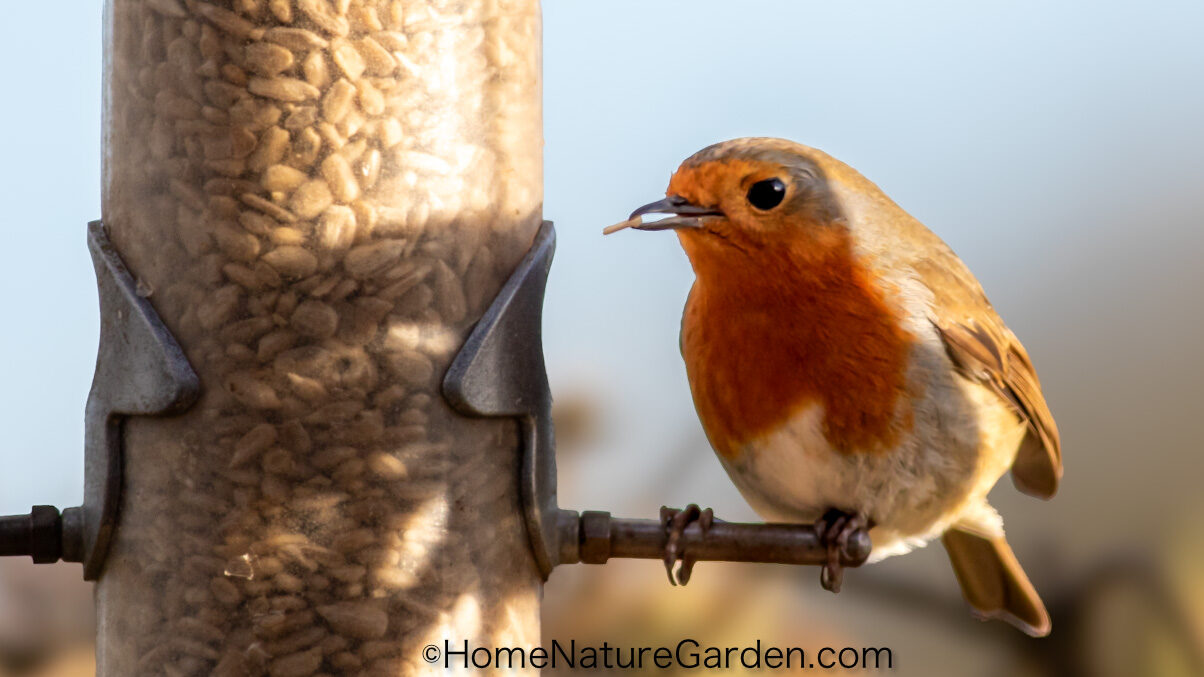
The robin sat on top of a neatly trimmed hedge, a little way from the feeders. When the sunflower heart feeder became free, the robin flew to a perch on the feeder and took a sunflower seed. It quickly flew off. At other times the robin fed on the sunflower hearts fallen onto the gravel below.
I was surprised to see the robin using a hanging feeder. Robins usually search for insects and worms on the ground. Where they prefer to eat. However, they will also eat food put out at feeding stations, such as small pieces of suet, sunflower hearts, or even cake, if these are on the ground or at a low level. This particular robin, seemed quite comfortable taking sunflower hearts directly from the feeder.
That experience reminded me how adaptable robins can be. While most robins prefer feeding on the ground, some do learn to use hanging feeders. Particularly when food is easy to access and the feeding station feels safe.
Choosing the Best Feeders for Robins
It can be helpful to know which feeders are the most suitable for robins in UK gardens. Even if you have a clever robin that prefers to use a hanging feeder, robins usually prefer feeders at ground level. Traditional hanging feeders are commonly preferred by finches, and they are often used by great tits and blue tits.
This guide gives the best feeders for robins, their preferred food, and how to create a safe and welcoming feeding area.
Why Robins Need Particular Feeders
Robins seem to prefer feeding places that feel calm, open and safe.
They generally:
* Search for food on the ground.
* Use bushes or shrubs to retreat from danger.
* Pause nearby before feeding.
* Prefer to be able to see around the feeding area.
A feeder that feels crowded or exposed may be ignored by robins.
Four Types of Feeders Often Used by Robins
These are the four types of feeders I have most often seen robins using in gardens.
1. Tray Feeders
Robins prefer feeders that they can stand on comfortably while feeding. If the tray feeder has a roof it will help to keep the bird food dry.
Best for:
* Most gardens.
* Soft food mixes.
* Sunflower hearts.
* Mealworms.
2. Bird Tables
Bird tables are ideal for robins because they can easily land on the table, to feed.
Busy bird tables may attract larger species such as pigeons, starlings and collared doves.
Tables may be placed away from bushes and trees where cats could hide. Also, not to near buildings where cats could jump onto the feeders.
Best for:
* Established feeding stations.
3. Ground Feeders
Robins naturally feed on the ground, so ground feeders may be very suitable for them. They prefer feeders that are in an open area and easy to access.
Ground feeders are suitable for robins if it is in a quiet area of the garden, and within easy reach of bushes or shrubs.
Best for:
* Natural feeding on the ground.
* Shy robins.
* Quiet areas.
4. Hanging Tube Feeders
Some clever robins are able to land or hover near a port on a hanging feeder and snatch a sunflower heart.
Best for:
* Finches.
* Tits.
* Sparrows.
* Occasional clever robins.
* Peanuts.
* Mixed seed.
* Sunflower hearts.
Feeders Worth Considering for Robins in UK Gardens
If you are looking for a feeder for robins, these may be suitable.
Tray Feeder for Robins
A covered tray feeder, such as the Houston Bird Seed Feeder may be the best option for robins. It provides access to food but also keeps food dry during wet weather.
These feeders can work well on fences, or walls, or in a quieter feeding area.
Hanging Tray
A simple hanging tray, such as a Mealworm Feeder for Robins (with free meal worms) can work effectively for robins. It is useful for mealworms, soft robin food and suet pellets.
Hanging trays are easy to clean and straightforward to top up.
Ground Feeding Trays
A guarded ground feeder, such as the Bird Feeder (with free Robin food) may be helpful where robins prefer feeding at lower levels.
Birds are able to enter the cage and keep a good look out for predators. This type of feeder deters larger garden birds, such as collared doves and wood pigeons.
It is suitable for soft food mix and mealworms.
Alternatively, another ground feeder for robins, the Ground Feeder Guardian Cage – Large Mesh is also for robins that prefer low level feeders near or on the ground. Since this is where they usually forage for food.
The robin can enter the cage to eat the food. Ground feeders with mesh bottoms allow the rain to drain away.
What Food do Robins Prefer
Robins prefer softer and smaller food than many other garden birds.
* Suet pellets.
* Mealworms.
* Sunflower hearts.
* Small seeds found in mixed seed.
* Soft food mix for robins.
Fresh water is also important, particularly in dry, cold or freezing conditions.
If you enjoy watching robins in your garden during winter, you may also like my guide to winter robins in UK gardens.
How to Create a Safe and Welcoming Feeding Area for Robins – Placing Feeders for Robins
Place feeders:
* Short flight to cover or bushes.
* In a quiet area of the garden.
* Away from cat access.
* At low or medium height.
* Where birds can be observed without disturbance.
If you would like to think more about creating a space that supports robins, you may find my ideas on garden design for robins helpful. In that guide, I explore how a habitat – shelter, heights, planting and layout can encourage regular visits by a robin.
Robin Behaviour Around Feeders
Robins seem to behave a little differently from the other birds in the garden. A robin may pause near a feeding station before feeding. Like the clever robin mentioned above, which sat on the neatly trimmed hedge, waiting for the hanging feeder to become free of other birds, before going to feed.
That robin showed flexible feeding behaviour. It also fed from seeds that had fallen to the ground beneath the feeders, mingling with dunnocks, which were also feeding there. When larger birds were on the feeders, the robin flew away, preferring not to be near squabbling starlings pecking at a fat ball. The robin returned when the feeding station was quiet again. It seemed tolerant of blue tits and great tits.
During the winter months, the robin in my garden defends the ground beneath the hanging feeders and the ground feeder from other robins. However, I have noticed that when there is snow on the ground, the robin seems to tolerate another robin. Robins usually prefer pecking at dropped seed on the ground, but harsher conditions seem to temporarily stop the robin from defending the feeding area.
Feeding Robins in Small Gardens
A patio, courtyard or small garden can attract robins. They prefer to feel safe in the garden and do not require a large space. A feeder placed near a shrub to retreat to, a bowl of fresh water and regular routine can be enough to make a robin feel at home in the garden. Large busy feeding areas my put a robin off. Ground feeders, wall feeders and tray feeders work well as a robin feeder in small gardens.
Feeding Robins in Winter Months
We can help support robins during the winter months.
Natural food resources decline in cold weather. There are fewer insects and worms. Additionally, extra energy is required to fly, forage for food and keep warm.
How we can help:
* Top up feeders regularly.
* Feed in the morning.
* Change water frequently.
* Clean feeders often.
* Keep a routine.
Birds learn when food can be found.
A Seasonal Approach to Feeding Garden Birds
During the summer months more natural food is available for garden birds. Insects, seeds, and worms can provide a good diet for birds.
Recent RSPB guidance has advised against feeding birds through hanging tube feeders from 1 May to the 31 October. These types of feeders are often heavily used in the warmer months, when disease may spread when feeding stations get overcrowded.
If you decide to continue feeding robins, fat balls, mealworms, or small suet pellets are a good option. Fresh water is also important.
Sometimes good support in the garden, comes from the natural foods, shelter, and a little wildness in the garden.
Things to Avoid
Overcrowded feeding areas.
* Robins may not visit
Poor hygiene.
* Old food can become damp and go off. Clean feeders and trays regularly.
Using only large feed mix.
* Robins prefer small seeds and softer food.
Exposed feeder.
* If a feeder is placed, for example, in the middle of a lawn, it may seem unsafe.
Conclusion
A robin seeks very little in the garden. Simply a safe place, cover to retreat in, and reliable food, particularly when the weather is harsh.
Even a small garden can offer this. Once a robin discovers the garden, it will visit frequently.
Frequently Asked Questions About Best Feeders for Robins.
Do robins use hanging feeders?
Some do, however many robins prefer feeders that have a tray, ground feeders, or bird tables.
Why do robins wait before they go to a feeder?
Robins frequently watch a feeding area from a nearby fence, shrub or branch to make sure the area feels safe.
Where should I place a robin feeder?
Near bushes and shrubs, in an area away from cats.
What is the best food for robins in UK gardens?
Soft food mixes, sunflower hearts, mealworms, and suet pellets are popular with robins.
Are mealworms good for robins?
Mealworms are very popular with robins. They can be useful when birds are feeding youngsters and during colder weather.
Do robins feed at the same time every day?
Yes they do. Robins learn the routine of when the feeders are topped up, and will often visit at the same times, particularly during winter months.
Should I feed robins in the summertime?
Yes, however natural food is widely available. Robins will continue to visit garden feeding areas if they do this all ready. Feed soft food, such as suet pellets and mealworms. Avoid heavily used hanging feeders with peanuts and mixed feed in feeders for other species, such as finches, in line with recent RSPB guidance on reducing disease risk at crowded feeding areas. Water is also very important during the summer months.
Why does only one robin visit the feeding area?
Robins are territorial and will defend a feeding station from other robins.
Can robins recognise people?
Some robins seem to get used to familiar people topping up feeders, particularly when feeding occurs regularly. Over time they make become bolder, however they are still wild birds.