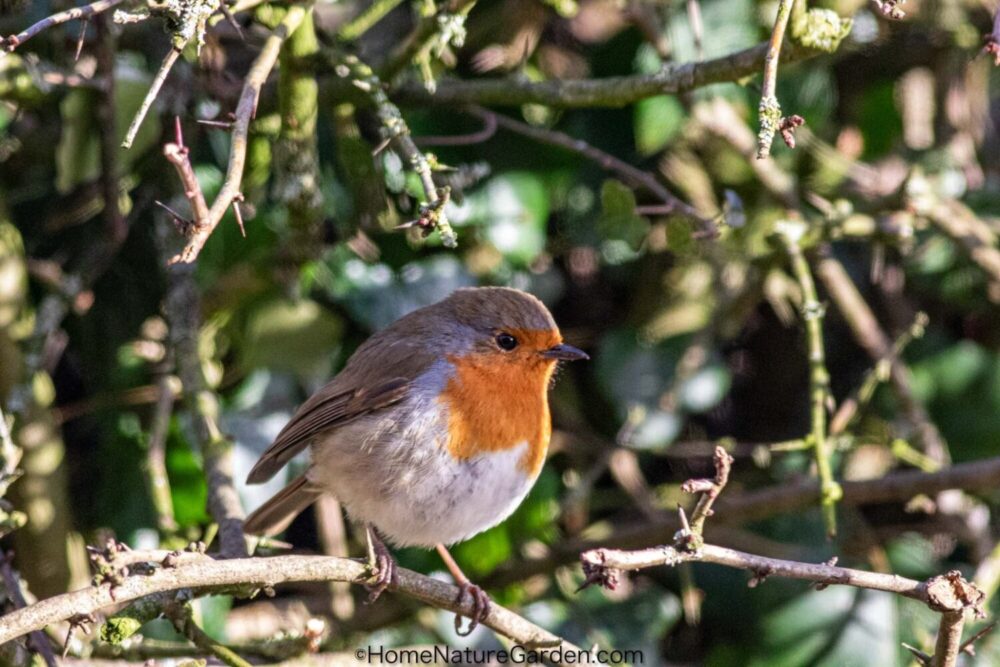
A Guide to the Best Robin Books in Britain
The robin is the most familiar bird in UK gardens, frequently seen throughout the year, even in winter. If you are looking for the best books about robins, this guide explores some books that focus on natural history, behaviour and cultural significance.
You can read more about how robins behave even in the winter months in my article about robins in winter. As one of Britain’s favourite birds, the robin is easily recognised with its red breast, its confident manner and its presence in gardens. As noted in organisations such as the Royal Society for the protection of Birds, robins are known for their bold behaviour and strong territorial instincts.
Robins have inspired writers, birdwatchers and naturalists and many authors have explored their lives from different perspectives, including modern nature writing, classic natural history and cultural approaches. The books about robins selected below focus on behaviour, territory, life through the seasons and its unique place within British culture.
The books are grouped by category rather than ranked, so you can easily find the type of writing you prefer.
Best Books About Robins
Modern Wildlife Writing
Natural history focuses on scientific observation, classification and the ecological behaviour of species. These books provide more in-depth information about the robin’s behaviour, classification and ecology and are well respected in the study of birds.
1. Robin: A Biography – Stephen Moss
Year of Publication: 2017
Moss discusses a life in the year of the robin. His writing is engaging, easy to understand, and lightly informative. Each chapter of this book focuses on a calendar month. The writing covers the author’s observations in the garden and wider countryside, and reflections about the robin in every month of the year.
Photographs / Drawings: Colour paintings and illustrations.
Strengths: Accessible for all readers. He talks about the robin as an essential subject in our gardens, countryside and culture.
Limitations: It has no identification tips. Moss talks about the robin in the UK, he does not cover the Eurasian robin seen elsewhere.
Why it’s worth considering:
This is ideal for readers who want to know more about robins than just identification. It is appropriate for bird enthusiasts and beginners who like narrative and science.
2. RSPB Spotlight: Robins – Marianne Taylor
Year of Publication: 2019
This book uses short sections to introduce the robin. It explains classification and identification; territorial behaviour and survival tactics; diet and feeding habits; nesting and lifecycle; population trends, and cultural significance of the robin. Taylor also looks at how robins survive through the winter months. You can read more about this in my article on robins in winter.
Photographs / drawings: High quality photographic images
Strengths: Focuses on key areas about the robin, such as nesting, behaviour and diet, in an engaging style without too much depth. Photographs reinforce the content. It also covers cultural symbolism and Christmas appeal.
Limitations: The book provides a lot of information but it is not heavily detailed. It is factual rather than narrative or storytelling. Aimed at general readers
Who this book is for:
Engaging, enjoyable read. Beautiful photography. Is an ideal gift book. A perfect introduction book. Combines behaviour, science and culture in one book. Validated by the RSPB ornithological organisation.
3. The Secret Life of Garden Birds – Dominic Couzens
Date of Publication: 2024
This book focuses on 50 garden birds, including robins. Short profiles of these species are provided. Each profile explores identification, survival strategies, nesting, habitat, and the intersection between species.
Strengths: The narration makes garden birds seem interesting. It explains why birds behave as they do. Couzens provides details of hidden behaviour and less well known facts. The book has an engaging, accessible narrative based on observation.
Weaknesses: Does not talk about the robin in any depth. It does not mention scientific research and is not appropriate for readers who require scientific rigour. It has very short sections and some readers may find it fragmented.
Photographs / drawings: Includes illustrations.
Who this book is for:
Ideal for beginner birdwatchers. It helps you to develop an understanding of how birds interact in the garden. The author makes familiar garden birds seem interesting.
4. Britain’s Birds: An Identification Guide – Rob Hume
Year of Publication: 2016
This book is a well detailed field guide focusing on all regular birds in Britain, including the robin. It provides detailed species accounts with information on identification, habitat, distribution, seasonal changes and behaviour. The robin is discussed within the context of British birds, showing readers how it compares to other, and similar species.
Strengths: It is a highly authoritative guide book produced in association with the RSPB. Clear species sections ease identification. Includes essential details on plumage, behaviour and song. Covers a vast number of species.
Weaknesses: It does not focus on the robin, therefore it has limited depth on the bird. The book is a functional field guide without narrative, storytelling or emotional engagement. It is not suitable for readers looking for a detailed study of robin behaviour.
Photographs / drawings: Provides detailed illustrations with identification pointers.
Who this book is for: This book is perfect for beginner and intermediate birdwatchers. It is a practical field guide for identifying robins and other garden birds. The range of species shows how robins exist within the wider bird population. A trusted and recommended guide book for British birds.
5. What the Robin Knows: How Birds Reveal the Secrets of the Natural World – Jon Young
Year of Publication: 2013
This book discusses bird behaviour as a way to understand the natural world. Young teaches readers how to become aware of the language of their immediate environment by observing and listening to birds, particularly robins. By understanding their alarm calls, their patterns of behaviour and their movements, you become aware that birds indicate the presence of predators, cats, hawks and humans. Young concentrates on the robin because it is responsive to disturbance before you see it, it is territorial, and highly vocal.
Weaknesses: It does not provide bird identification details, scientific research, or cultural interpretations of birds.
Strengths: The practical guidance in this book helps readers build observational skills. Gradually these skills develop into an ecological awareness of the behaviour patterns occurring within your surroundings. It is a book that encourages engagement with nature rather than simply reading the book.
Why it’s worth considering:
This books helps you learn observation skills, and gives you a deeper understanding of bird behaviour. It is ideal for garden birdwatchers, and hikers.
Classic Natural History
Natural history focuses on scientific observation, classification and the ecological behaviour of species. These books provide more indepth information about the robin’s behaviour, classification and ecology and are well respected in the study of birds.
6. The Life of the Robin – David Lack
Year of Publication: 1943; 2016.
David Lack has been praised for his writing which appeals to non-scientific and scientific readers. Lack colour ringed adult robins, to tell them apart and spent four years observing their ecology and behaviour, including territorial behaviour, pair formation, song, nesting, and migration. The book is a detailed account of the annual cycle of the robin. The author combined science and culture to discuss both ecological behaviour and he also used literary references.
Photographs/ Drawings: Black and white lined drawing.
Strengths: Information is based on detailed research and observation. Explains why robins behave as they do. One of the first studies on the ecology and behaviour of the robin. It is a well respected book for its observation and research.
Weaknesses: No modern photography. Focuses on science rather than accessible modern story telling.
Who this book is for:
Consider this book if you want depth and classic research, and a natural history study. It provides serious scientific understanding of the robin, and is authoritative research. It explains song, breeding behaviour and territory.
7. Robins and Chats – Peter Clement
Year of Publication: 2015.
This is another scientific based book about robins and a wider bird group of chats, to which the robin belongs. Other chats in this species group include redstarts, nightingales and wheatears.
Clement discusses distribution, habitat and species variation, much like in David Lack’s book, above. However, this book provides more information and uses scientific terminology.
Photographs/ Drawings: Good quality illustrations enable the reader to identify the range of birds covered in the book.
Strengths: This book is a highly detailed reference book. It has a global perspective and includes diversity of the birds covered. This is for the interested reader who wants to go to the next best book after David Lack’s “Life of the Robin”.
Weaknesses: Information is specialist and assumes the reader has prior knowledge about birds. It includes details about the European robin, but it also focuses on other robins and other birds within the chats species group. The book is rather large and expensive.
Why it’s worth considering:
This is a serious expert reference book. It would be ideal if you seek a complete authoritative guide. Suitable for ornithology students or serious birdwatchers. You may want to discover more about the whole family of the robin and understand them from a global perspective. It provides species accounts of identification, behaviour and distribution, including maps of their range. High quality identification colour plates and photos enable identification of subtle differences between species.
Cultural and Popular Nature Writing
Robins are embedded in British culture, every day life and symbolism. These books place robins within the wider ecology of gardens and countryside using personal experience, story telling and accessible narrative. They are ideal books for those interested in the cultural and emotional significance of the robin. Perfect books for gifts.
8. Bob the Robin: A Love Letter to Britain’s Favourite Bird – Tony Putman
Year of Publication: 2012
This book is about the author’s reflections on birds, including robins. It provides ways you can develop a deeper understanding of the robin, by watching and listening and sitting quietly. The content is helpful and engaging to read. It explains what different bird calls mean, such as movement, predators and changes in habitat. The mixture of philosophy, science and environmental awareness is thought provoking.
Photographs/Drawings: It has very few images. Simple diagrams.
Strengths: It focuses on bird language and helps readers to understand how birds communicate.
Weaknesses: The book is not completely about the robin, it also talks about other birds.
Why read this book:
This is an emotional story. Bob is a robin in Putman’s garden.The book describes a relationship between the robin and the author. It is an enjoyable, easy read, like a story. Perfectly deal for readers who don’t want a heavily academic book. Robin territorial behaviour, and human interaction is set out in a simple accessible way. The book is highly rated on popular sites such as Amazon. It is recommended and well liked. Suitable as a gift book for gardeners, and nature lovers.
9. The Robin Book – Jane Russ
Year of Publication: 2019
This is a very reader friendly book. It has an engaging style of writing containing facts about art, symbolism, and myth. It also covers behaviour, physiology and migration. Russ provides a balanced introduction to the robins.
Photographs/Drawings: Excellent photographs provide the background for the content.
Strengths: The images show bird behaviour, such as nesting and feeding; close ups of birds, and scenes from different seasons. This makes the book ideal for casual readers, beginners and general audience. It is a pocket sized book (15x15cm) and makes a perfect Christmas or birthday present.
Weaknesses: Does not go into scientific research or detail. It has short sections. The text is light and best for browsing.
Who this book is for:
This is a gift book. It is ideal present for nature lovers, particularly those that are interested in robins. Readers may enjoy the visual content of the book because it has fantastic wildlife photography. It is easy to learn, with light reading, and it covers basic facts.
10. Robin – Helen F. Wilson
Place of Publication: 2022
Introduces the background literature on the robin, including ‘The life of the robin’ by David Lack. She covers identification in adults and juveniles, their closeness to human activity, foraging on insects, worms and seeds and fruits. The history of the robin, is discussed as a species of the songbirds group of birds and a chat. Chats have similar behaviour traits. For example, another chat is a flycatcher and they tend to fly down from a branch to catch an insect. A robin also displays this form of behaviour.
Photographs/ Drawings: Illustrations.
Strengths: It is an accessible book for beginners. A compact design with a good overview of the robin.
Weaknesses: This book contains factual material. It does not include references to cultural aspects of the robin. The book is short and readers may feel as if it lacks depth like some other books on the robin.
Who this book is for:
This is suitable for readers looking for a straight forward book about the robin. It is appropriate for beginners and younger readers who want an introduction to the robin’s characteristics, behaviour, and habitat. An informative guide without detailed scientific details.
All of the books here are available from major booksellers, including Amazon.
Conclusion
These books about robins show the complexity of the robin’s life. It is shaped by territory, survival and the seasonal changes and it is linked to symbolism in British culture.
If you are a beginner an introductory guide from the robin books in modern wildlife writing may provide an interesting introduction.
For those seeking more depth, classic natural history provides a more detailed perspective.
The cultural and popular symbolism books offer a more personal focus for those interested in the unique relationship between people and robins.
If you are interested in understanding how robins behave during the winter months read my article:
Winter Robin in UK Gardens: Territory, Ecology and Survival.
FAQs About Robin Books
What are the best books about robins?
Three recommended books about robins include Robin by Stephen Moss for a balanced context of the robin; Bob the Robin by Tony Putman for its unique personal narrative, and the excellent images and visual guide provided by the RSPB Spotlight: Robins by Marianne Taylor. Your preference depends on whether you would like a science, storytelling or practical based book.
Do robin books include illustrations or photographs?
Field guides tend to use drawings to help with identification of species. Whereas, the RSPB Spotlight: Robins provides a vast array of colour photographs. Others use text, or simply illustrations, but narratives about robins tend to have fewer drawing or photographs.
What can you learn from robin books?
Many robin books discuss territory, nesting, diet, and different season patterns. Whereas, others focus on the cultural significance of the robin, and its association with winter and Christmas in British culture.
Are there any scientific books about robins?
David Lack’s Life of the Robin is regarded as the classic scientific book about the robin. The book gives in-depth information about the observations of robin ecology and behaviour. It is an excellent book for those interested in an academic, research based approach.
Are there any books exclusively about the robin?
Several books focus specifically on the robin, discussing their ecology, behaviour and cultural significance. Other books cover a wide range of birds in a field guide, and include robins.
Which robin books are best for complete beginners?
The Robin Book by Jane Russ and the RSPB Spotlight: Robins are both excellent for those starting out in birdwatching. Both offer easy explanations, helpful images, and straightforward language.
Do books about robins make good gifts for people?
Yes, they do. The Robin Book by Jane Russ is an idea book for a gift. It is appealing because it contains excellent wildlife photographs. Bob the Robin by Tony Putman is another book that would make an interesting gift. It is about the relationship between Bob and Putman.
Is experience in birdwatching necessary to read books about robins?
Not at all. Most of the robin books are for those seeking an introduction to the robin and general readers. Classic natural history books provide comprehensive details about robins, and other birds. Whereas, many modern nature writing are clear and easy to understand and no birdwatching experience is necessary.